
Tattoo culture isn’t inherited because people love tradition. It’s inherited because continuity is the mechanism through which the profession preserves its memory, values and identity.
What Have We Lost?
On the 6th November 2025 I published an article called The Death of the Monoculture. At the time, I thought I’d reached a solid conclusion.
Looking back, I don’t think I had.
The problem wasn’t the conclusion. It was the scope.
The original article was really about monoculture as it relates to society. There are perfectly good reasons to be suspicious of any system that gives too few people control over what everyone sees, hears and believes.
But tattooing isn’t society. It’s a profession.
I wasn’t wrong exactly. I just don’t think I was asking the right question. Just like in tattooing, you only get better by being prepared to look at your own work, see what you’d do differently and have another go.
So, instead of asking what we gained when our shared culture disappeared. My question now is…
What have we lost?
Tattooists Love Stories
From the very first time I hung out in a room filled with tattooists I’ve been listening to stories. Tall tales, anecdotes and legends. All told with love and reverence. In the early days, tattooing had no archive. There was no internet, very few books and very little documentation.
But, those stories weren’t simply remembered because of a shared culture. They were selected because of it. Because each story has a moral and that moral holds a shared value worth preserving.
Maybe they survive because they solve problems? Maybe they’re how professions solved problems before formal institutions and digital technology existed.
The Profession Was the Archive
Tattooing had no archive.
There were no universities, no formal qualifications and no governing body preserving its knowledge. Instead, that knowledge lived inside people. Stories moved from artist to apprentice, studio to studio and convention to convention.
Stories Became Infrastructure
These days we’re all benefitting from about 150 years of shared knowledge, identity, reputation, warnings and tradition.
And that, I think, is where I finally started seeing the value in all of that. That shared experience isn’t just about belonging to an elite group as I’d initially viewed it.
It’s very hard to point to any aspect of tattoo culture today that wasn’t either built or maintained by this shared experience. After my initial suspicion and rejection of it as just nostalgia, I’ve realised those stories weren’t just folklore.
They’re infrastructure.
Infrastructure matters because it connects things. Roads connect towns. Railways connect cities. Stories carried one generation to the next.
Shared infrastructure became personalised infrastructure
So, What happens to a profession when its collective memory stops being collective? If our stories were once the archive, then what’s the archive now?
lass=”p1″>The difference is that we’ve lost the shared part of the experience and now, no two tattooists are reading the same archive. The digital revolution has ‘given’ us an algorithmically driven, completely personalised experience online. In practice though? Personalised, disconnected or disorientated?
Digitally we’re all marooned. Castaway on our own Robinson Crusoe island. Posting pictures and videos like messages in bottles. Connected to something. But not to the same thing.
Just a couple of decades ago we’d have all been sat around in the hotel bar at the convention physically showing each other pictures of the work we’d done that day, discussing the challenges and offering critiques. That was your ‘comments’ feed.
And no, this isn’t just nostalgia for the ‘olden days’. I thought the same when I was sitting where you are now. Kiss the future baby and all that bollocks but it’s not better. And these days it’s not just a feeling, it’s measurable.
Almost everything has been personalised for us. Whether we like it or not. Our feeds. Our entertainment. Our news. Even our professional culture. We accidentally replaced lineage with discovery.
The Internet Didn’t Replace the Archive
Old tattooing said: Someone introduces you to the next idea. Modern tattooing says: The algorithm introduces you to the next idea. It’s the enshittification of the shared experience.
The profession wasn’t just the archive. It was the delivery mechanism. That’s why the stories mattered. Why conventions mattered, why magazines mattered. That’s why hanging around the studio mattered. They carried one generation into the next.
The internet didn’t replace that chain. It bypassed it.
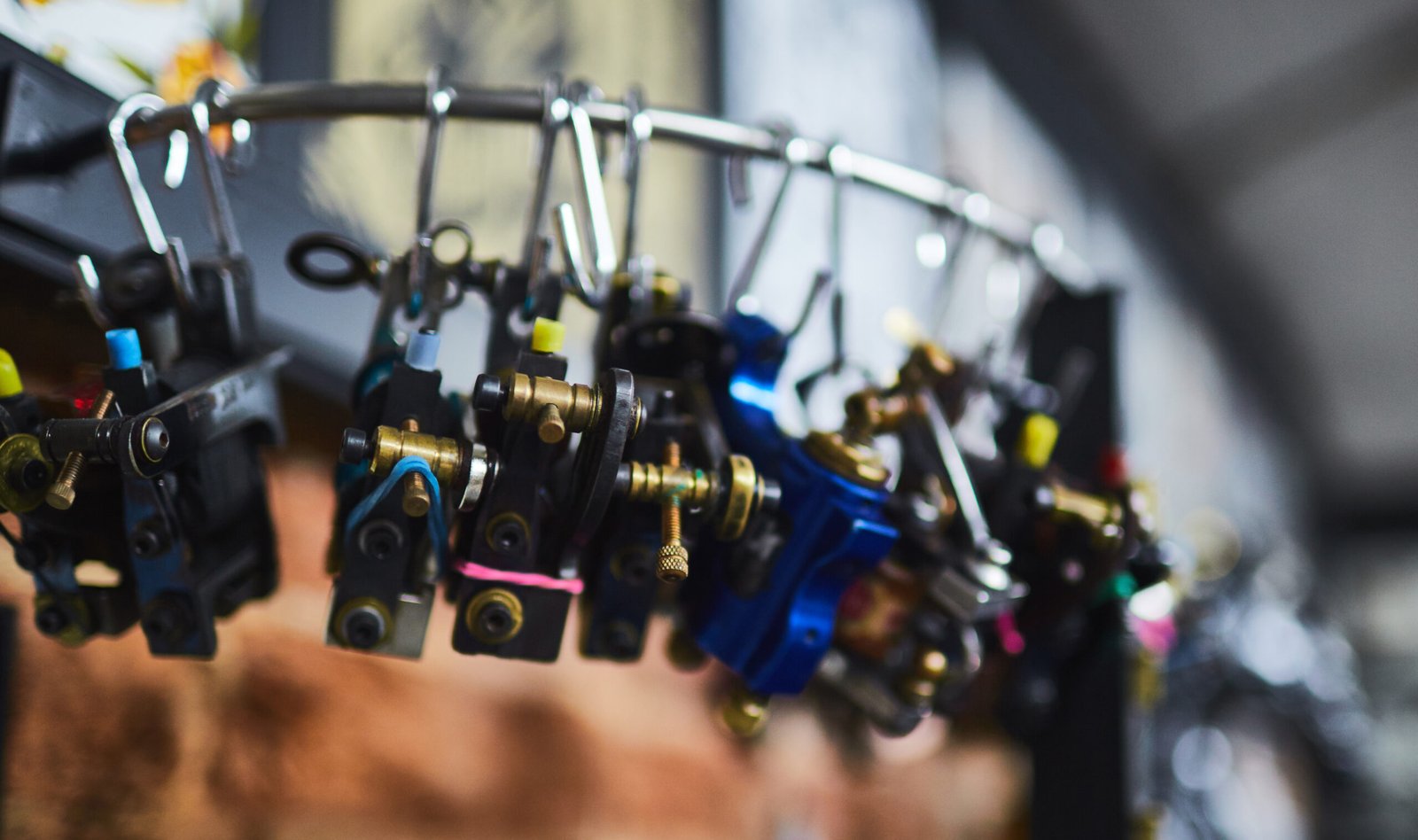
These days it’s common for artists to have no idea of tattoo history. At its most extreme I’ve even seen artists unable to recognise a coil machine as a tattoo machine.
For many people, the internet made lineage optional and, along the way, it broke the mechanism through which culture reproduced itself. So, how do values survive? Well, they don’t survive as a culture unless they’re transmitted collectively.
Because shared values require a shared lineage. A culture.
Can a Profession Survive Without Continuity?
A profession can survive without continuity. But can it remain the same profession without it?